New here? Get more useful information by subscribing for free to the RSS feed

April 29th, 2013

Reusable Bag Giveaway from MightyNest

Groovy Green Livin Reusable BagReusable bags are taking over our kitchen and that’s a good thing. I’m talking about reusable snack and sandwich bags for packing our school lunch and they’re everywhere, filling drawers and cabinets waiting to be used.

Did you know that children’s lunches create more than 3.5 billion pounds of garbage each year, which amounts to a crazy 18,760 pounds of trash annually from an average sized elementary school. That’s a lot of waste.

My three boys are pretty much on auto pilot in the morning. Once their alarm clock goes off (aka mom) it doesn’t take much nudging to get everyone out of bed.

We all head downstairs and within a matter of minutes our kitchen turns into a tornado. Breakfast preparation and lunch packing begins. Food and reusable bags are everywhere-the floor, counters and other random spots. I just take a deep breath and let it go because it’s well worth it.  All three boys make their own lunch and breakfast with minor supervision from mom and dad. It’s pretty amazing to watch them begin to understand what a green and healthy lunch looks like-starting with reusable bags instead of plastic baggies.

Moving away from the use and toss mentality and investing in a few reusable bags for lunch is such a simple way to make a BIG environmental impact.

Our friends over at MightyNest have an extensive collection of reusable sandwich and snack bags to choose from (and lots of other eco-friendly products!).

MightyNest has graciously offered to giveaway a  snack/sandwich reusable bag set to FOUR lucky Groovy Green Livin readers. Here’s what will be given away (one set per winner):

Eco-Ditty

I had never heard of this brand before. Eco-Ditty reusable snack bags and reusable sandwich bags are made from 100% organic cotton with a Velcro closure. The outer colorful fabric is printed with low-impact inks and the inside is made from un-dyed organic cotton liners. They are all BPA Free, Lead Free, PVC Free and can be hand or machine washed in cool water.

Groovy Green Livin Reusable bag

LunchSkins

I’ve reviewed LunchSkins before and have a few of my own! Lunchskins come in all sorts of great designs and are made from cotton fabric coated with a “food-safe” polyurethane liner. These bags are durable and withstand the high heat of the dishwasher. Fabric and inks have been independently tested for safety and are lead-free, phthalate-free and BPA-free.

Groovy Green Livin reusable bag

Semilla Snack Bags

Another reusable bag brand that’s new to me-Semilla. These bags are hand sewn in one of my favorite cities-San Diego. We’ve been using our bag for sandwich wraps and they actually fit! I love that these bags can go right into the washing machine. The fabric is a Hemp and Organic Cotton blend and the liner is 100% nylon.  The lining is non-toxic nylon: lead free, phthalate free and BPA free.

Groovy Green Livin reusable bag

SnackTaxi

SnackTaxi has been a staple in my reusable bag drawer for a long time. The bags are sturdy and durable. They have a new addition to their reusable bag offerings- gluten free snack bags and reusable sandwich bags! These bags will keep your gluten free snacks distinct from other foods. The label on outside of bag reads “Gluten-Free” as opposed to “SnackTaxi” found on the other SnackTaxi bags.

Groovy Green Livin reusable bag

GIVEAWAY!

The kind folks over at MightyNest have graciously offered to give FOUR Groovy Green Livin readers one of these snack and sandwich reusable bag sets. The Giveaway will close at 1 pm EST on 5/3/13. By entering your name and other information you acknowledge that you have read and are agreeing to our Official Rules. Good luck!

a Rafflecopter giveaway

Disclosure: I was given four reusable bags to test out from MightyNest. All opinions are my very own.


March 4th, 2013

3 Foods to Keep Out of Your Kitchen

3 Foods to Keep Out of Your Kitchen

I think most of us can agree that not all foods are created equal. Keeping up with the latest and greatest information on food can be somewhat of a challenge. There’s so much information floating around out there, making it hard to know where to begin and what to believe.

I received an email last week asking for advice on what foods should be avoided. While many foods could easily be on this list, I decided to put together my top 3 foods that I try to keep out of my kitchen.

Canned Tomatoes

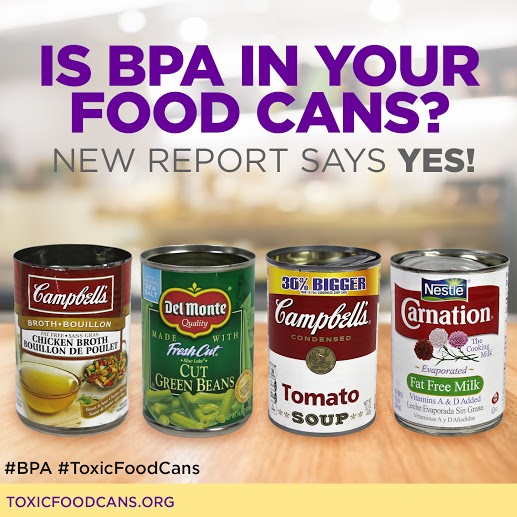
Most epoxy linings in canned foods contains bisphenol A (BPA) which leaches into the contents of the can, some at very high levels. An FDA study found canned green beans contaminated with as much as 730 parts per billion of BPA. Some manufacturers are working hard and have been successful in finding an alternative to BPA (which could be just as bad as BPA!) in tin can liners, but tomatoes are acidic so the packaging options are limited. Almost all canned tomatoes have BPA in the lining.

According to the Breast Cancer Fund-

Exposure to BPA, used to make the epoxy-resin linings of metal food cans, has been linked in lab studies to breast and prostate cancer, infertility, early puberty in girls, type-2 diabetes, obesity and attention deficit hyperactivity disorder. Childhood exposure is of concern because this endocrine-disrupting chemical can affect children’s hormonal systems during development and set the stage for later‐life diseases.

Solution

Grow your own tomatoes! If gardening isn’t your thing look for tomatoes packaged in glass containers.

Farm Raised Salmon

Environmental groups such as Seafood Watch and the Environmental Defense Fund, have put nearly all farmed salmon on their “red” or “avoid” list. Farm-raised fish are generally placed in crowded cages and given antibiotics and exposed to pesticides. Their living environment is less than desirable. Wild fish are out in the wild, living and swimming in open oceans as they were meant to be. Wild fish aren’t exposed to the same toxins as their farm-raised cousins.

Farm-raised salmon generally has artificial color added to give it that nice pink color. When salmon are raised in a farm-raised environment they are  fed “fish meal”, made up of ground fish parts, and as a result, the fish color is a shade of gray rather than pink. Coloring is added because consumers expect their salmon to look pink.

Some bad news: Frankenfish (genetically engeneered salmon) could be on your dinner plate by the end of the year. If the US Food and Drug Administration (FDA) approves this we will have no way of knowing whether the salmon we are eating is genetically engineered because at this time there’s no labeling requirement.

Solution

Look for wild salmon at the market, which should be clearly labeled. All Alaskan salmon is wild-caught. Support current actions to demand GMO labeling as listed over at GMO Inside.

Microwave Popcorn

Making a bag of microwave popcorn is about as convenient as it gets. Put the bag in the microwave and in about 4 minutes you have a bag of delicious popcorn. It turns out that microwave popcorn is one of those foods that just doesn’t belong in your kitchen.

The lining of the microwave popcorn bag contains PFOA, a chemical that has been linked to cancer in animals. The chemical was also found to have been associated with a lower vaccine response in children, making them more vulnerable to disease. The Environmental Protection Agency says that PFOA is a “likely carcinogen” and is likely to cause cancer in humans, although no definitive studies have been released yet.

There’s another chemical in the actual microwave popcorn called diacetyl, which is found in the imitation butter flavoring. When heated the fumes released from a bag of microwave popcorn contain this chemical and have caused microwave popcorn factory workers to have a respiratory disease called “popcorn workers lung”.

Some popcorn manufacturers have attempted to replace diacetyl with substitute ingredients, but findings show that these replacements are just as bad or worse.

Solution

Make your popcorn the old fashioned way-in a pot with some salt and oil. Another solution is to invest in an air popper for a low-calorie, healthy snack.

What other foods should be on this list? 

photo credit: PetitPlat – Stephanie Kilgast via photopin cc

July 16th, 2012

{Giveaway} Win a Cast Iron Pan from MightyNest

groovy green livin cast iron on stove top

MightyNest happens to be one of the wonderful sponsors here at Groovy Green Livin. Founded by two parents, MightyNest is an Groovy Green Livin MightyNestonline store, resource center, and community dedicated to helping parents create healthy, safe homes. Their mission is to give families the ability to research, get advice, and buy natural, non-toxic products all in one place. From kitchenware to skin care, MightyNest’s safety experts have a selection of products that are free from known toxic ingredients such as BPA, PVC, Phthalates, Lead, Melamine, Formaldehyde, Parabens, and more.

Moving away from Teflon

I’ve really been working hard to make my kitchen a “Teflon Free Zone”.  My old Teflon pots and pans have been swapped out on an as needed basis and filled my kitchen with alternative, safe cookware. Many of my pots and pans are stainless steel, which I started accumulating as wedding gifts. I finally figured out how to clean stainless steel without scrubbing for days.

I have been wanting to add a cast iron pan into the mix of healthy pots and pans in my kitchen.  When I think of cast iron I think of my grandparents, since it was their cookware of choice.  Cast iron is know for its durability and even heat distribution. When MightyNest graciously offered to send me a cast iron pan for review their timing was perfect.

Cooking with cast iron

Groovy Green  Livin cast iron with organic tomatoes

MightyNest sent me a Lodge Seasoned 10″ Cast Iron Skillet. Since it’s arrival the skillet has been getting a lot of use. It’s the perfect size for making eggs-which my three boys have perfected.

It’s simple to use:

  • Before cooking, apply oil to the cooking surface of your pan and pre-heat the pan slowly (always start on low heat, increasing the temperature slowly). Then it’s ready for cooking.

Cleaning cast iron

This piece worried me. I had heard so much about “seasoning” a cast iron pan and wasn’t exactly sure what that meant.  It’s actually quite simple. From the Lodge website:

  • After cooking, clean utensil with a stiff nylon brush and hot water. Using soap is not recommended, and harsh detergents should never be used. (Avoid putting a hot utensil into cold water. Thermal shock can occur causing the metal to warp or crack).
  • TIP: If you are having trouble removing stuck-on food, boil some water in your pan for a few minutes to loosen residue, making it easier to remove.
  • Towel dry immediately and apply a light coating of oil to the utensil while it is still warm.

Final thoughts on the Lodge Seasoned 10″ Cast Iron Skillet

Overall I really like the skillet. It’s the perfect size for a grilled cheese, omelets or sauteing vegetables. The cleanup is much simpler then I had expected and not much sticks to the pan. The one big downside to this pan and to all cast iron is the weight of the pan. My kids cook quite a bit and this pan is much too heavy for them to lift by themselves.

GIVEAWAY

MightyNest has graciously offered to giveaway a Lodge Seasoned 10″ Cast Iron Skillet to one lucky Groovy Green Livin reader. By entering your name and other information you acknowledge that you have read and are agreeing to our Official Rules.

In addition to offering a Lodge Seasoned 10″ Cast Iron Skillet for the giveaway, MightyNest has generously offered to give Groovy Green Livin readers 10% off their orders by using DISCOUNT CODE:  GROOVY10 for 10% off any purchase (except air purifiers and mattresses) through July 31, 2012.

a Rafflecopter giveaway

Disclosure: Thank you to MightyNest for a complimentary Lodge Seasoned 10″ Cast Iron Skillet for review . The opinions expressed in this post are my own.


June 12th, 2012

BPA Free Isn’t Enough

Groovy Green Livin Campbell's Soup BPA

For the past seven years, BPA has been on the minds of parents, consumers and public health advocates. I’ve been following the BPA issue closely and devoted much of my writing to this topic. I was even interviewed by ABC World News about the FDA’s decision not to ban BPA. There have been some wonderful victories during the seven years, including 11 states taking action to ban BPA from baby products.

BPA in food packaging and canned foods

Since a groundbreaking study co-published by the Breast Cancer Fund and Silent Spring Institute showed that food packaging was a major source of BPA exposure, consumers have started to shift their attention to BPA in canned food.  The study found dangerous levels of BPA were even found in a wide variety of canned foods specifically marketed towards kids. Over the past year, consumers sent more than 70,000 messages to canned food companies telling them to stop using BPA and to replace it with a safer alternative.

The good news is that many companies are starting to listen. Muir Glen tomatoes, Trader Joe’s and Eden Foods have all been credited with eliminating BPA from some of their can linings. I recently wrote about Campbell’s announcing its plan to move away from BPA.

Removing BPA is a start, but not enough

Removing BPA from can linings is a great start, but it’s still not enough. With the exception of Eden Foods, most companies have not been transparent about the alternatives they will use in place of BPA. The information is nowhere to be found on their websites.

We want companies to know that “BPA-free” isn’t enough. As new alternatives to BPA are discovered some troubling information has been uncovered.  The notoriously bad plastic PVC is an FDA-approved alternative for BPA in can linings, despite the fact that vinyl chloride is a known human carcinogen.

That’s why the Breast Cancer Fund’s Cans Not Cancer campaign is demanding that manufacturers publicly disclose what they’re using instead of BPA so that we, as consumers, know what we’re eating. We understand the challenges of moving away from BPA, but that makes it all the more important for manufacturers to be transparent about the chemicals they’re using instead and the review process that led them to that particular alternative.

Campbell’s needs disclose what BPA alternatives they’ll use

Still no word from Campbell’s, so today (June 12) the Breast Cancer Fund launched a social media day of action, demanding that Campbell’s make public what BPA alternatives it is using or plans to use. Our message is that Campbell’s decision to move away from BPA is a victory for consumers, who have been demanding this change, but to truly be an industry leader, the company needs to fully disclose the alternatives that will be used.

What you can do

Just say no to plastic.

The study released by the Breast Cancer Fund and Silent Spring Institute shows shows that we can reduce our BPA exposure significantly by cooking fresh foods at home, avoiding canned foods, choosing glass and stainless steel food and beverage containers, and not microwaving in plastic.

Post on your Facebook page

We are all sharing posts on our Facebook pages to hopefully get Campbell’s attention. Here’s a sample post:

•    Think BPA-Free means safe? Think again. Learn more at http://www.breastcancerfund.org/big-picture-solutions/make-our-products-safe/cans-not-cancer/faq.html

Post to Twitter

Get the word out through your Twitter account. Here’s a sample Tweet:

•    #BPA free does not=safe. Tell us companies: what are you using instead? Is it safe? http://bit.ly/BPA-FAQ  #CansNotCancer

Get involved

There’s no way to completely avoid BPA until Congress passes the Safe Chemicals Act, which will require chemical manufacturers to show their products are safe before they end up in the things we buy. The chemical industry has acknowledged the need for federal reform of the chemical policy to restore public confidence in the safety of their products.  Now they just need to do something about it.

If you would like to help- check out the many ways to GET INVOLVED over at Safer Chemicals Healthy Families, Breast Cancer Fund, Healthy Child Healthy World and Moms Clean Air Force.

Do you avoid BPA? How about BPA free products?

[Photo used under Creative Commons from Pittaya/Flickr]

Linked up to Seasonal Celebration Sunday Natural Mothers Network

May 23rd, 2012

National Stroller Brigade in DC

Groovy Green Livin Green Bloggers Stroller Brigade

Green Bloggers at the National Stroller Brigade in Washington DC. Shane from Environmental Booty, Diane from Big Green Purse, me, Micaela from Mindful Momma and Anne from Flour Sack Mama.

Anyone who has a child would probably agree that maternal and paternal instincts kick in the first time you lay eyes on your child, possibly even before. The instinct to protect your child from harm is very real and impossible to ignore. Part of parenting is making choices about which products we bring into our homes as we try to make the best possible decisions for our families. Our desire to keep toxins away from our children is a given. Unfortunately, toxins are basically unregulated in this country and can make their way into our homes without our knowledge.

Change is needed

This needs to change. The law that was meant to protect us is now old and outdated and isn’t doing its job. We still have cans with BPA linings on our shelves. Laundry detergents continue to contain cancer causing chemicals. Nursing pillows and car seats are doused in toxic flame retardants. Toxic chemicals are found in children’s jewelry. Early puberty, childhood cancer, infertility, learning and developmental disabilities are rising at alarming rates. There is no legislation in place to protect us. Companies aren’t required to test the safety of the chemicals in their products. This needs to stop.

My trip to DC

Groovy Green Livin in front of Capitol with Massachusetts group

The Massachusetts gang: Elizabeth from Clean Water Action, Gayle an amazing activist, yours truly and Laura another amazing activist.

I just returned from a trip to Washington DC organized by Safe Chemicals Healthy Families. We gathered on Capitol Hill for a National Stroller Brigade to let Congress know that we won’t stand for this any longer.  We united and demanded that Congress pass Senator Frank Lautenberg’s Safe Chemicals Act.

The gathering included incredible people, and lots of them, each with a story to tell about how they have been affected by toxins in the environment. And the stories weren’t happy-many were devastating and heart wrenching.

It seems like a no-brainer to me. This is something we can control, while there continue to be so many things that are beyond our control. Toxins don’t belong in our products and having regulations in place will enable this to become a reality. Who wouldn’t want safe products for children? I’m trying hard to understand why this continues to be a battle. We need companies to become accountable for their toxic products before they reach the shelves. So why haven’t all the Senators agreed to support this?

The issue crosses party lines

Groovy Green Livin National Stroller Brigade in Senator Kerry's office

The Massachusetts gang in with Senator Kerry’s team.

While in DC, I was honored to have an opportunity to meet with the Massachusetts teams from the offices of Senators Kerry and Brown to discuss this important issue. I’m thrilled that Senator Kerry recently decided to co-sponsor Senator Frank Lautenberg’s Safe Chemicals Act. Senator Brown hasn’t signed on as of yet. I’m hopeful that he will soon see the importance and necessity of this regulation.

The need for safer chemicals and safer products crosses party lines-all children and all people are affected, regardless of your party loyalties.

It’s not too late. Please urge your congressional leaders to take action.

A special thank you to Safer Chemicals Healthy Families (big shout out to Lindsay Dahl, Deputy Director of SCHF) for organizing this fantastic and inspirational event. Please stop by their site to learn how you can take further action. Together we can make a difference.

Groovy Green Livin Safer Chemicals Healthy Families

Shane from Environmental Booty, Lindsay Dahl Deputy Director of Safer Chemicals Healthy Families and me!

Are your Senators in support of the Safe Chemicals Act? Please reach out to let them know how much it means to you.

April 19th, 2012

{Sponsor Spotlight}Get to Know My Ecobaby Store

My Eco Baby Store

My Ecobaby Store has been a longstanding sponsor of Groovy Green Livin and I am very grateful to have them as part of our team. I decided it was time for all of us to learn a little bit about this store that was born from the need to provide quality organic products for babies. I had a chance to bounce a few questions around with Dinah, the owner of My Ecobaby Store.

My eco baby store logoGGL: Why did you start My Ecobaby Store?

MES: I started, “My Ecobaby Store” because I have a very big passion for living a green lifestyle. I love our planet and it’s important to me how we treat it. Having a healthy and happy family is priority number one on my list. My belief is that it starts with our children. I love children and babies. Most importantly, I love seeing them healthy and strong. It’s scary nowadays, with so many different toxic chemicals being put into our products, so we become more cautious about what we buy for our kids. There have been so many reports of toy recalls, BPA warnings, and so on. I wanted to help make a difference and that is why I started, My Ecobaby Store.

GGL: How do you select your products?

MES: Fair-trade practice is a very important to me, so I’m particular about how it is made and what goes into products. I look for very high quality products and not your type products that you would find at a general store. –so lots of research! I look for products made here in the USA and most of my items are.  Also, a lot of our items are handmade and customizable is one of the things that make us different.

I look for products that offer the following:

  • Eco-friendly— the product is kind to our earth.
  • Organic—safe and natural for your baby, children and mom.
  • BPA, phthalates,  & PVC-Free.
  • Safety– for your children, if I do not feel if it would be safe for your family. I will not put it in my store.

GGL: What are the top three things people should look for when shopping for safe baby products?

MES:

  1. First, I would look at safety and protection. Products need to be safe for your baby.
  2. Second thing to be aware of is the material in the products, so quality is important. There are too many toxic chemicals, so trying minimizing the exposure as much as possible.
  3. Lastly, look for products that make the least impact on the environment. We want to leave our planet a healthier place for our babies.

GGL: You are a carbon neutral shipping company. What does that mean?

MES: Well, that means after your purchase at the end of the check out. One dollar is donated to the Green Air Project (GAP). We help to replenish the forest by planting trees. Clean air is important to us. It not only affects our children but animals too.  We want to reduce our CO2 output to zero and do it in a constructive manner.

You have partnered with Green Air Project. Tell us about that relationship.

MES: Our partnership means that every time a product is purchased through our online store, a portion of the funds will go directly toward planting trees. Our partnership with Green Air Project is supporting the environment and wildlife.  It’s a great cause and a way to leave a positive impact. It is a great partnership and we look forward to help reduce our carbon footprint with GAP. Stop by Green Air Project to find out more.

Stop by My Ecobaby Store to see all of their products that  are deemed safe for your family and the environment.  Enter DISCOUNT CODE: GROOVY10 for 10% off of your purchase.


April 2nd, 2012

My Appearance on ABC World News and the BPA Decision

Soup can

For those of you who missed the national news on Saturday night, as I did, here is the clip from my appearance on ABC World News Tonight discussing bisphenol A (BPA).

The FDA’s refusal to ban BPA was a tremendous disappointment.

My interview with ABC World News with Diane Sawyer took place on Friday afternoon, just as the FDA rejected the Natural Resources Defense Council petition requesting that the toxic chemical bisphenol A, or BPA, be declared unsafe and banned from food packaging.

According to Jeanne Rizzo, Breast Cancer Fund President & CEO:

The body of evidence against BPA has been mounting over the years we’ve been calling on the FDA to make a definitive determination on BPA’s safety. Most of us are exposed to BPA every day. In fact, the CDC found BPA in 93 percent of all Americans tested, and the National Institutes of Health point to food packaging, including food cans, which are lined with BPA, as a major route of exposure. BPA has been found in blood and urine of pregnant women, in the umbilical cord blood of newborns and in breast milk soon after women gave birth. Nearly 200 lab studies show that exposures to even low doses of BPA, particularly during pregnancy and early infancy, are associated with a wide range of adverse health effects later in life, including breast cancer. Studies show that BPA exposure can make non-cancerous breast cells grow and survive like cancer cells, and can actually make the cells less responsive to the cancer-inhibiting effects of tamoxifen, a drug used in the treatment of breast cancer.

In my opinion the FDA’s decision was unfounded and weak. Simply put: BPA doesn’t belong in our food packaging.

What can we do to avoid BPA?

The influx of emails and comments that I have received since this piece aired has confirmed and strengthened my belief that together we can make a difference on this issue and many other issues affecting our health. If we choose not to purchase products that have BPA then the companies will hear our demands and have no choice but to make a change. Perhaps they will follow Campbell’s Soup’s lead and initiate the process of removing BPA because of consumer demand.

Don’t buy from the companies that continue to use BPA in their canned goods.

  • HERE is a great list from Inspiration Green of brands that continue to use BPA and those that don’t.
  • Kathy from Safe Mama has put together one of her fabulous Cheat Sheets: BPA Free Canned Food.

Take action.

  • Join the “Cans Not Cancer” campaign launched by The Breast Cancer Fund urging manufacturers to replace BPA with safer alternatives.

Find alternatives to canned goods.

Avoid canned foods altogether. Join a CSA and enjoy local, seasonal fresh fruits and vegetables.  Use dry beans and pasta-it may take a little longer to prepare, but it’s worth it!

BPA free may not be safe

Many comments have raised the issue that a BPA replacement might be just as dangerous. While I agree with the concern, we need to take this journey one baby step at a time.

There is no excuse for this. BPA doesn’t belong anywhere near our food.  Please take the time to tell these companies that we are not OK with this.

How do you avoid BPA?

[Photo used under Creative Commons from Steven dePolo/Flickr]

[Video courtesy of ABC World News Tonight]

Related Posts Plugin for WordPress, Blogger...

About Lori

Lori Popkewitz Alper, Founder and Editor of Groovy Green Livin, provides eco-wellness consulting for businesses, schools, homes and individuals; and inspiration for a greener lifestyle through her Groovy Green Livin blog and website. Read more….

Click HERE to contact Lori

Lori on ABC World News

Grab Button

Want to add a link back to Groovy Green Livin? Just place the following html code on your website.
Groovy Green Livin

Archives

green moms carnival

BlogWithIntegrity.com